
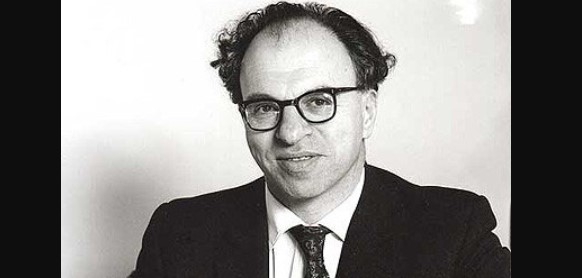
Hermann Bondi was one of the most remarkable scientific minds of the 20th century. Born in 1919 and passing away in 2005, he left behind a legacy that stretched across mathematics, cosmology, and public service. Bondi was not only a scientist but also a thinker who believed in the power of rational ideas to shape society. His work on the steady-state theory of the universe, his contributions to relativity, and his leadership in science policy made him a figure of lasting influence.
He was a refugee who fled Nazi Austria, a man who faced internment during World War II, and later rose to become one of Britain’s most respected scientists. His journey shows resilience, courage, and a commitment to truth. For readers today, Bondi’s biography is not just about equations and theories—it is about how science and humanity can come together to make the world better.
Hermann Bondi Wife, Career, Family, Age, Death
| Attribute | Details |
|---|---|
| Full Name | Hermann Bondi |
| Born | 1 November 1919, Vienna, Austria |
| Died | 10 September 2005 (aged 85), Cambridge, England |
| Nationality | Austrian-born British |
| Education | Trinity College, Cambridge |
| Known For | Steady-State Theory of the Universe, Bondi Mass, Gravitational Waves |
| Fields | Mathematics, Cosmology, Physics |
| Major Contributions | Radar research during WWII, Relativity studies, Cosmology theories, Accretion theory |
| Philosophy | Strong supporter of Karl Popper’s falsifiability principle |
| Positions Held | Professor at King’s College London, Director-General of ESRO, Chief Scientific Adviser to UK Government |
| Awards & Honors | Fellow of the Royal Society (1959), Knight Commander of the Bath (1973), Gold Medal of Royal Astronomical Society, Albert Einstein Medal (1983) |
| Family | Married Christine Stockman; five children including Liz Bondi (feminist geographer) |
| Beliefs | Lifelong atheist, humanist, President of British Humanist Association |
| Resting Place | Ashes scattered at Anglesey Abbey, Cambridge |
| Wikipedia | @Hermann_Bondi |
Early Life in Vienna
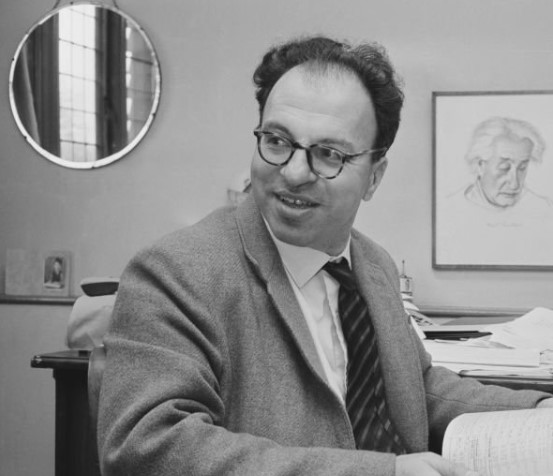
On 1 November 1919, Hermann Bondi was born in Vienna, Austria. His father was a physician, and the family lived in a secular environment. From a young age, Bondi showed a strong interest in mathematics. He was known for his sharp mind and curiosity, which later shaped his career in science. Growing up in Vienna during the interwar years was not easy, especially for Jewish families like Bondi’s.
Despite the challenges, Bondi’s early education gave him a strong foundation. He was raised in a household that valued knowledge and rational thought. This upbringing also influenced his lifelong atheism and humanist beliefs. Bondi’s early years were marked by both promise and danger, as the rise of antisemitism in Austria threatened his future.
Escape from Austria and Emigration to Britain
The late 1930s were a dangerous time for Jewish families in Austria. In 1937, Bondi moved to Cambridge, England, to study mathematics. His move was supported by well-known scientists like Arthur Eddington and Max Perutz. Just before the Nazi takeover of Austria in 1938, Bondi sent a telegram to his parents urging them to leave immediately. His warning saved them from persecution.
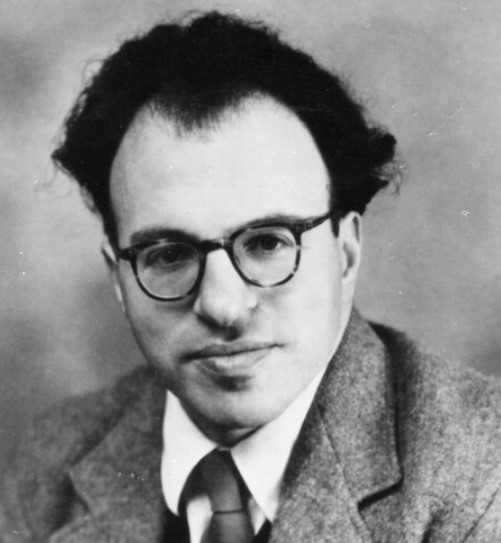
At Cambridge, Bondi studied at Trinity College. He quickly stood out as one of the brightest students of his generation. In 1940, he was named Senior Wrangler, the highest honor in mathematics at Cambridge. During World War II, Bondi was interned as an “enemy alien” because of his Austrian background.
Wartime Contributions: Radar and Operational Research
During the war, Hermann Bondi worked with Fred Hoyle and Thomas Gold on radar technology. This work was part of Britain’s defense efforts and played a key role in the war. Bondi’s mathematical skills were used to improve radar systems, which helped detect enemy aircraft. His wartime work showed how science could be applied to real-world problems.
Bondi’s collaboration with Hoyle and Gold also shaped his later career. The three scientists developed strong bonds during the war, and their discussions about cosmology eventually led to the steady-state theory. Bondi’s wartime contributions were not just technical—they were the beginning of ideas that would change astronomy.
Pioneering Work in Relativity
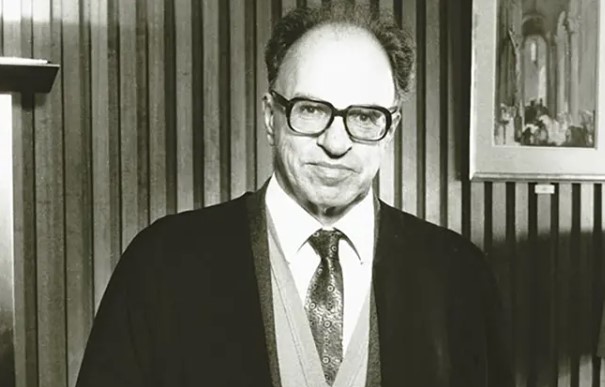
After the war, Bondi turned his attention back to pure science. One of his most important areas of research was relativity. He worked on gravitational waves, which are ripples in space-time predicted by Einstein’s theory. At that time, many scientists debated whether gravitational waves were real or just a mathematical idea. Bondi helped settle this debate.
He introduced concepts like the “Bondi mass” and the “sticky bead argument.” These ideas showed that gravitational waves carry energy and can have real physical effects. His 1962 paper on gravitational waves is often considered his best work. This research laid the foundation for later discoveries, including the detection of gravitational waves in 2015 by LIGO, which confirmed what Bondi had argued decades earlier.
See Also:- Lucia Mokrasova
The Steady-State Theory
In 1948, Bondi, along with Fred Hoyle and Thomas Gold, proposed the steady-state theory of the universe. Instead, it was always expanding, with new matter continuously created to keep the density constant. The idea was based on what they called the “Perfect Cosmological Principle,” which stated that the universe looks the same everywhere and at all times.
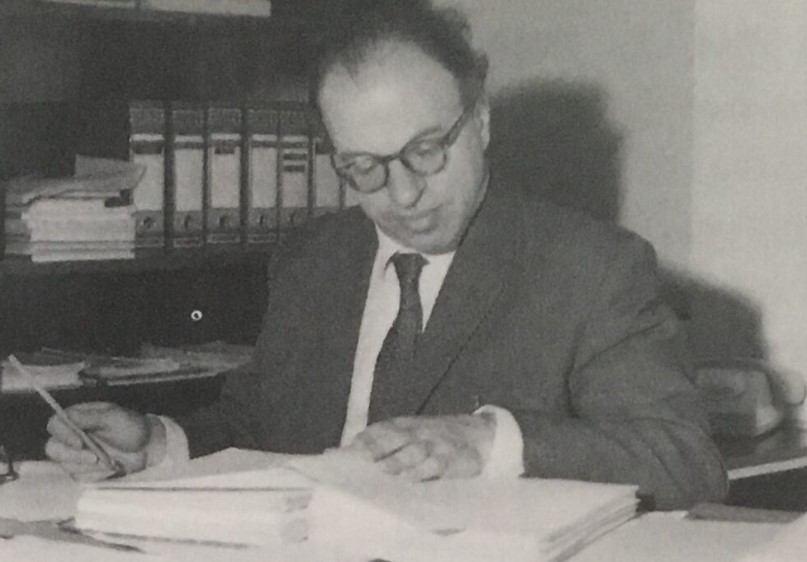
The steady-state theory was bold and attractive because it avoided the problem of explaining a beginning of time. It suggested an eternal universe, which appealed to many scientists and philosophers. Bondi’s role in developing this theory showed his willingness to challenge accepted ideas and think creatively about the cosmos.
Academic Career and Teaching Legacy
Bondi’s academic career was long and influential. He taught at Cambridge and later became Professor of Mathematics at King’s College London. He was known as a clear and inspiring teacher who encouraged students to think critically.
Bondi also believed in reforming science education. He wanted students to learn not just facts but also how to question and test ideas. His teaching style combined rigor with warmth, making him respected both as a scientist and as a mentor. His influence extended beyond the classroom, shaping the way science was taught in Britain.
Leadership in Science and Policy
Hermann Bondi was not only a scientist but also a leader in science policy. He served as Director-General of the European Space Research Organisation (ESRO), which later became part of the European Space Agency. In this role, he helped shape Europe’s space research programs and encouraged international cooperation. His leadership showed that science could cross borders and bring nations together.
Later, Bondi became Chief Scientific Adviser to the UK Ministry of Defence and the Department of Energy. He also worked with the Natural Environment Research Council. One of his most practical contributions was his involvement in the Thames Barrier project, which protects London from flooding. These roles showed how Bondi used his scientific knowledge to solve real-world problems and guide national policy.
Personal Life and Family
Bondi’s personal life was also rich and meaningful. He married Christine Stockman, who was herself a mathematician and astronomer. Together, they shared a love for science and raised five children. One of his daughters, Liz Bondi, became a well-known feminist geographer.
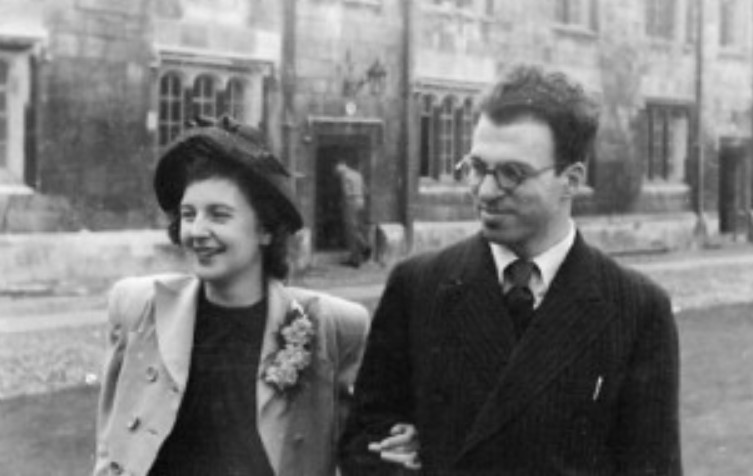
The Bondi family was active in humanist circles, reflecting Hermann’s values. Despite his busy career, Bondi remained close to his family. His marriage and children gave him strength and balance, showing that even great scientists need love and support in their personal lives.
Later Years and Health Struggles
In his later years, Bondi faced health challenges. He suffered from Parkinson’s disease, which limited his physical abilities. Despite this, he continued to engage with science and humanism as much as possible. His determination to stay active showed his resilience.
Bondi passed away in Cambridge on 10 September 2005. His ashes were scattered at Anglesey Abbey, a place he loved. Even in his final years, he remained committed to truth and humanity. His life story is one of courage, intellect, and compassion.
Read Also:- Ernst Herter
